Research Team: MUNI
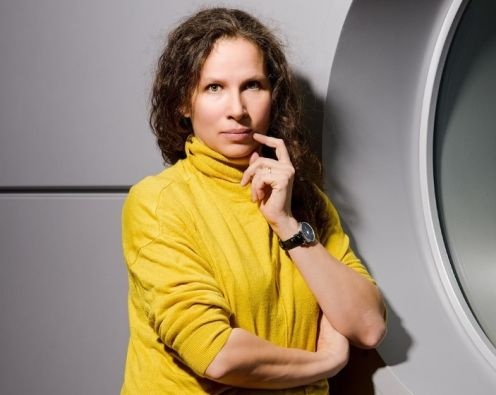
Integrative physiology and adaptation to extreme conditions
Prof. MUDr. Julie Dobrovolná, Ph.D.,
Mgr. Jan Kučera, Ph.D.
Faculty of Sports Studies, Department of Physical Activities and Health Sciences
Integrative physiology is a highly interdisciplinary field that primarily focuses on how different physiological systems in the body work together and how this interaction affects adaptation to external conditions. In the spaceflight environment, astronauts are exposed to unique challenges such as low gravity, high levels of cosmic radiation, and social isolation, which can have a profound effect on the functioning of organ systems and their interplay. Integrative physiology seeks to understand these complex interactions and develop strategies to help astronauts minimize the detrimental effects of extreme conditions during short- and long-term space missions.
The insights gained then have broad implications not only for spaceflight but also for medical applications on Earth, for example in the treatment of osteoporosis or in patient rehabilitation or neurointensive care.
The team is primarily concerned with the analysis and, in particular, the interpretation of physiological signals obtained in different environments, including the extreme environments of space, and the development of new methods to monitor physiological signals and predict serious events based on these data.

Human exploration in the context of space exploration and microgravity
Mgr. Bc. Lucie Ráčková
Environmental Physiology, RECETOX MU
Lucie Ráčková and her international and interdisciplinary team are dedicated to human research in the context of space exploration and microgravity. Since 2020, she has carried out several projects, including two expeditions to Antarctica with the Czech Antarctic Research Program, and six space training missions in five different countries (CHILL ICE II, BIOGENDER - VENUS, NIKE I, Asclepios III, APICES, AMADEE-24). The team has presented the results of these projects at prestigious events such as the International Astronautical Congress and the NASA Human Research Program Investigators Workshop.
For example, the group, with Emma Chabani, Ph.D. (Human Design Group) and Laure Boyer, Ph.D. (SpaceshipFR and MEDES CNES), developed a standardized protocol for testing the effectiveness of stress and fatigue countermeasures that has been successfully applied in a laboratory experiment and in the Asclepios III training mission. The protocol is applicable in other relevant contexts, and the results of the studies are used to further develop technologies for stress management and performance optimization in the work environment.
The team also focuses on testing innovative methods and technical solutions to increase the technology readiness level. Examples include testing a prototype of a thermodynamics-based stress measurement device in cooperation with Entrant s.r.o., or a device from the Faculty of Biomedical Engineering at the CTU in extreme conditions. With a team from PoliSpace, Politecnico di Milano, led by Davide Scarlatti, they are developing countermeasures against thermal stress during field activities in training missions, which will be applied in the Asclepios IV mission.
Other topics include human interaction with the natural environment, technology and team members. Collaborating with Maneesh K. Verma (TU Delft), Prof. Gabriel De la Torre, Ph.D. (Neuropsychology and Experimental Psychology Lab at the University of Cadiz), Assoc. Patrik Kutilek, Ph.D. (Faculty of Biomedical Engineering at CTU) and Assoc. Prof. Raphaelle Roy, Ph.D. (Neuroergonomics & Physiological Computing at ISAE-SUPAERO) to test indicators of user-friendliness and workload associated with the use of technologies such as drones and rovers.
A project with Jan Krajhanzl, Ph.D. (Department of Environmental Studies, MUNI) investigating the relationship between humans and the environment has been successfully tested in space missions and is being prepared for testing in Antarctic conditions and on the International Space Station. Understanding changes in environmental perception under extreme conditions allows for the development of better countermeasures for long-term missions and for normal operations on Earth. Understanding changes in pro-environmental attitudes provides information to support meaningful expeditions and missions for the benefit of humanity and nature.
In cooperation with doc. Iva Poláčková Šolcová, Ph.D. (Institute of Psychology of the CAS) and Tomáš Doseděl, Ph.D. (Department of Sociology, MU), they investigate the evaluation of individual experiences with isolation and team interaction. This collaboration allows for an in-depth examination of the variability and content of individual experiences, which is crucial for identifying specific risks associated with living and working in extreme conditions.
As of 2023, they are also pursuing research in space medicine. Projects in collaboration with Assoc. Petra Bořilová Linhartová, Ph.D. (Microbiome Analysis Laboratory), Elliott James Price, Ph.D. (Biomarker Analysis Laboratory) at RECETOX MU and Assoc. Jan Křivánek, Ph.D. (Research Group: Dental Development and Regeneration, Faculty of Medicine, MU) focus on changes in the composition of the microbiome and immune markers during isolation in a training mission and the development and regeneration of mineralized tissues in microgravity. The group is also collaborating with Wasim Ahmed (CEO of Metavisionaries), James Green, Ph.D. (CSO of Metavisionaries, former Chief Scientist at NASA) and the Space Innovation Labs at Oxford University on research applied to the ICECubes Service.
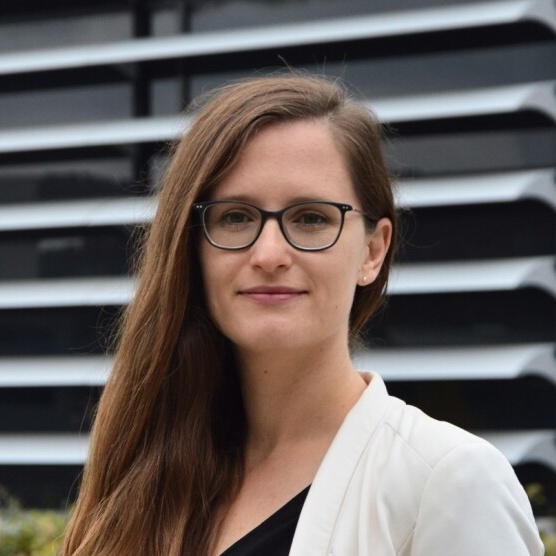
Reproductive health of male and female astronauts
Mgr. Marta Gimunová, Ph.D.
Faculty of Sports Studies, Department of Physical Activities and Health Sciences
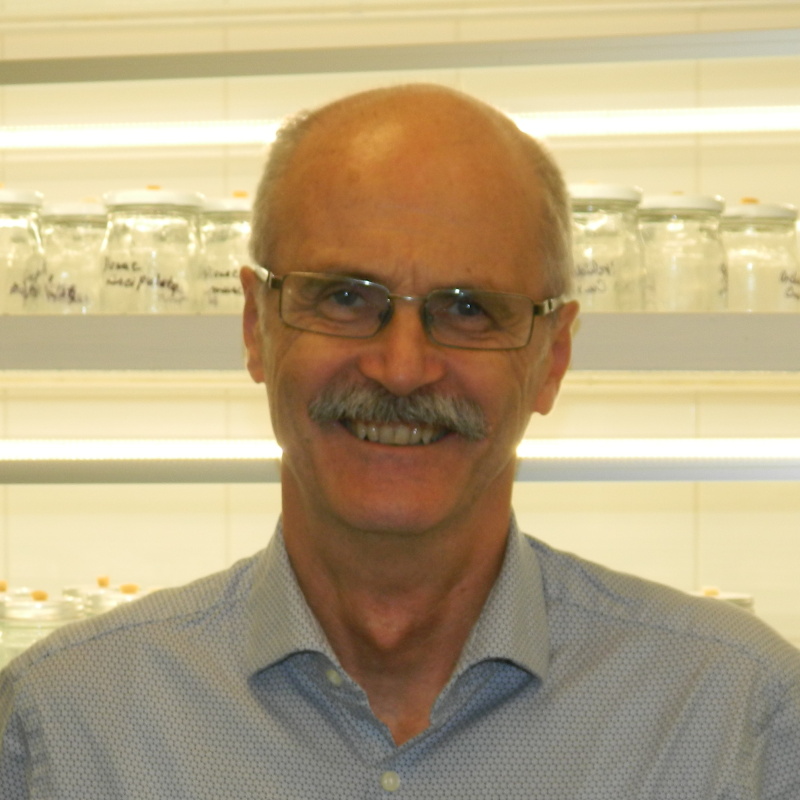
Plants in space: From extremophilic lichens to space agriculture
Prof. Miloš Barták, CSc.
Experimental Plant Biology, Faculty of Science, Masaryk University, Brno
Miloš Barták and his team, in collaboration with a number of national and international institutions and groups, are engaged in research of autotrophic organisms with potential applications in astrobiology and, more specifically, the issue of plants in space, whether in orbital complexes or in future manned stations having greenhouses on the Moon or Mars.
One of the scopes of the research is the study of extremophiles, specifically lichens, model organisms for astrobiology, particularly with regard to their resistance to physical environmental factors. Milos Bartak is a participant of many expeditions to Antarctica, therefore, he works primarily with lichens from maritime and continental Antarctica. Moreover, lichens from other extreme regions, such as the Atacama Desert are studied as well. Within the last decade, his team has focused on stress markers in the photosynthetic apparatus of lichens with algal and cyanobacterial symbionts exposed to stress extremes, such as e.g. dehydration, cold and frost, and high doses of radiation.
Research oriented into higher plants for space applications focuses the growth and biomass production of selected plant species (Brassica oleracea, Brassica rapa, Capsicum annum, Lactuca sativa, Raphanus sativus, Galega orientalis) cultivated in substrates mimicking lunar regolith. The main aim of the experiments is to develop and evaluate optimal technology, including (1) the composition of the nutrient solution, (2) optimizing the physicochemical characteristics of regolith-based substrates, (3) optimizing the addition of organic matter to lunar regolith analogues, and (4) assessing the possibility of recycling the resulting substrates for repeated cultivation cycles. In the experiments, great attention is paid to (5) markers of photosynthesis and production vitality of plants grown in regolith systems monitored using advanced biophysical methods. The results obtained in recent years contribute to the objectivization and standardization of requirements for technical solutions for future Lunar/Martian cultivation complexes while respecting the ISRU concept.